On the Exhibition of Wonders of the Creation
Nuri Abaç (1926-2008), created a "surrealist" atmosphere in his paintings by using Hittite reliefs, mythology, fairy tales, Hacivat and Karagöz depictions, and daily life scenes in his understanding of art based on diversity of traditions of Anatolian history. He started his education in the "Painting" department of the State Academy of Fine Arts in 1944, at the Leopold Levy workshop, and graduated from the "Architecture" department, which later he had been transferred to, in 1950.
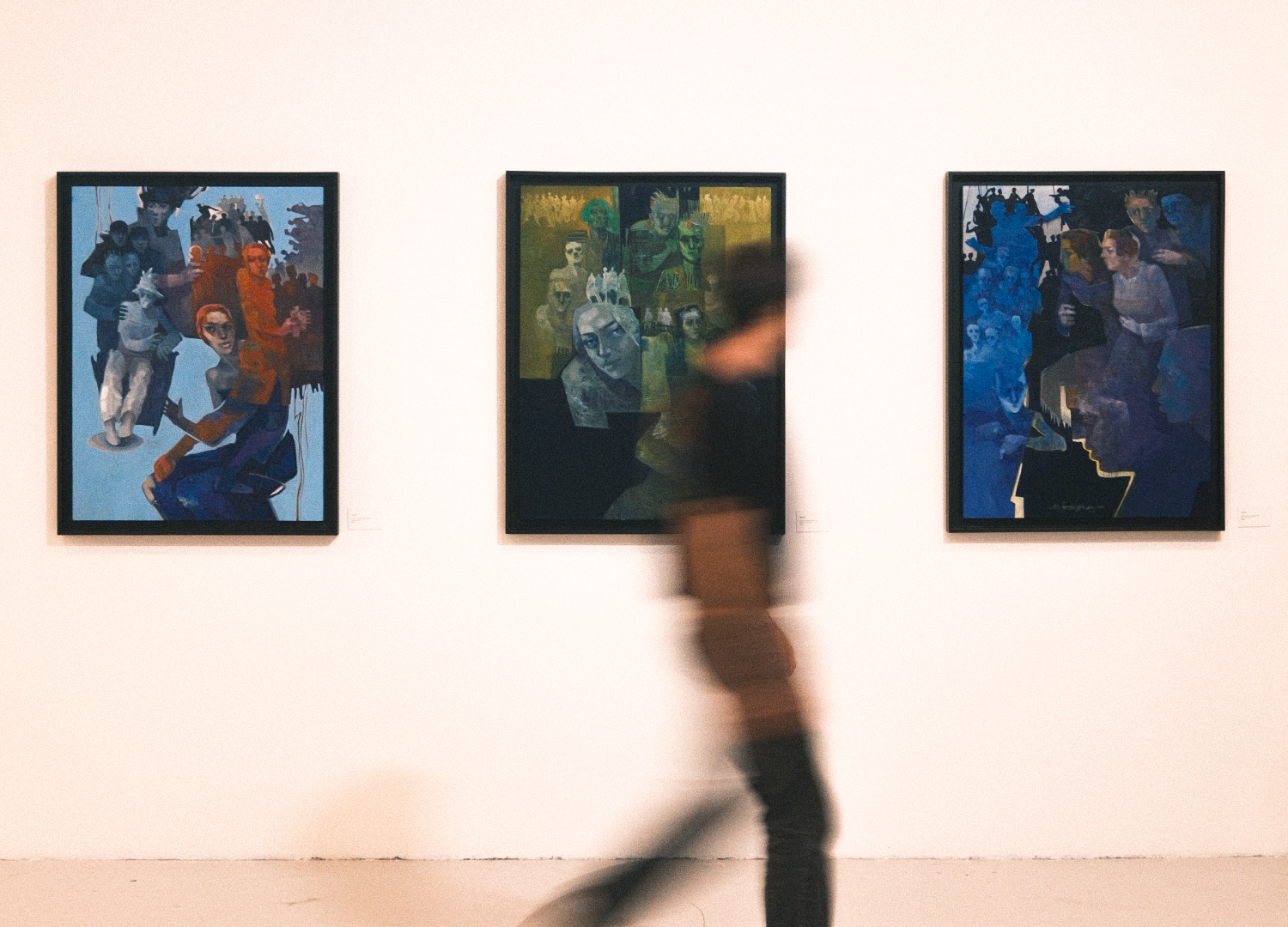
The exhibition titled "Acâibü'l Mahlûkāt" presents a cross-section of the artistic journey of the artist, who passed away in 2008, starting from his first comprehensive Academy years to the 2000s. The capital Ankara had an important place in the life of Abaç, who settled there in 1961. While he created all his works, he was inspired by the cultural diversity of the geography in which he lived. Although the world he created in his paintings is considered as "surrealist", "fantastic" and "traditional", there is actually something more in his artworks. Reality-dream, life-death, joy-sorrow are intertwined, and this intricate structure has created a unique, silent, strange yet deep language in the artist's character. That's why we decided to give the name of the exhibition based on the latent language in all of the artist's paintings.
Every image we watch, figures/figurely rising with distorted limbs, have become monumental like an architectural structure. The name of the exhibition was inspired by all these figures and was chosen to decipher the subconscious world in Abaç's silent character. As we all know “Aja’ib al-Makhluqat and Ghara’ib al-Mawjudat” A.D. (d.682/1283) is an important work of cosmography by Zakariya al-Kazvini, who was born in Kazvin. There is also a work by Tûsî, dedicated to Tuğrul Bey, one of the Seljuk sultans, in 1175. Especially in this work, strange things in the sky are depicted as strange things between the sky and the earth, seas, mountains, precious stones, rocks; cities, mosques, churches, synagogues; trees, plants, medicines, engraved images; faces; demons; birds, sea and animals.
Nuri Abaç associated scenes of daily life with Anatolian legends and our traditional art forms. In his works, there is a deep literary description and joyous other world shaped by metaphors. It appeared with a "surrealist" style that reminds us of "embroidery-painting" including references. The background of the paintings is created by an imaginary atmosphere in space that is turning into a decorative element from an architectural structure due to the effects of their formation. This texture is the original character of his painting style. The search for texture manifests itself in the grotesque structure of the figures in his 34 artworks of which we will name as black and white period of his artistic journey. The works have never been seen for a very long time, have remained hidden, and will be exhibited for the first time in this exhibition.
Abaç built a structure reminiscent of architecture education on the background of his paintings, also did not ignore the idea of showing a "humorous situation" with figures/multi-figures and tendency to stack in front of the infrastructure. Satire is the language of the hidden stories of his works. At the same time, the visuals presented by the traditional improvised theater and Karagöz, which we are all accustomed to, were more sculpted and compiled with an understanding of "a normalized figure" with its physical features. Especially from the 1990s to the last canvas he painted in 2008, his human figures have taken their place in our memory as warm, sympathetic and adorned with a riot of colors that make the audience smile.
Abaç’s understanding of art always includes social criticism and ironic references. He illustrated the legendary mythological creatures of Anatolian culture in a fairy-tale and surrealist-fantastic style; The exhibition, which consists of these works, also discusses historical and current issues of our traditional arts such as in Karagöz's personality and form analogy.
He focused on a wide range of topics, all the unique details of the country that can come to mind, such as fishermen, bagel sellers, marketplaces, taverns, weddings, tea gardens, ferries and many more. He was influenced by traditional forms of expression and the formal language of cultural heritage, and shaped the sorrow of historical events with his figures, which he transformed into images in a world of strangeness.
Nuri Abaç passed away in Ankara in 2008. The exhibition, titled Nuri Abaç Wonders of the Creation, includes a unique selection from the collection-archive of his son Celal Abaç, as well as Zeynep Özkan Özeren – Prof. Dr. Sinan Özeren and Utku Çakır Özer; We sincerely thank you for your support... Zihni Tümer is the project manager of the exhibitionNuri Abaç: Wonders of the Creation.
This exhibition is an archaeological excavation, a tribute to Nuri Abaç, who always lived and breathed with art, to his artistic personality, to his unique style, his human values, his interest in local themes and images in the language of art, and his interest in the ancient civilizations that witnessed the Anatolian lands. “Life is short, art is long” and Nuri Abaç is always with us…
Dilek Karaaziz Şener
Curator