A geography is not merely a physical place; it is a collection of narratives where layers of time, memory, and identity intertwine. Art, in turn, moves among these layers—sometimes as a silent witness, sometimes as a transformative subject. As the layers of time multiply one after another, space itself becomes a form of memory, and the imagined expressions transferred onto paper and surfaces through various artistic gestures evolve into the spontaneous exchange of artistic accumulations and cultural dialogues across geographies and borders.
It is worth remembering that, for the artist, the relationship established with a new geography or place is not merely a visual representation; it is also a kind of intellectual, sensorial, and historical excavation. In this context, the “Rewind” exhibitions should be read not as an “outcome” but as a “process”: a reflection of co-creation, encounter, and enrichment through diversity.
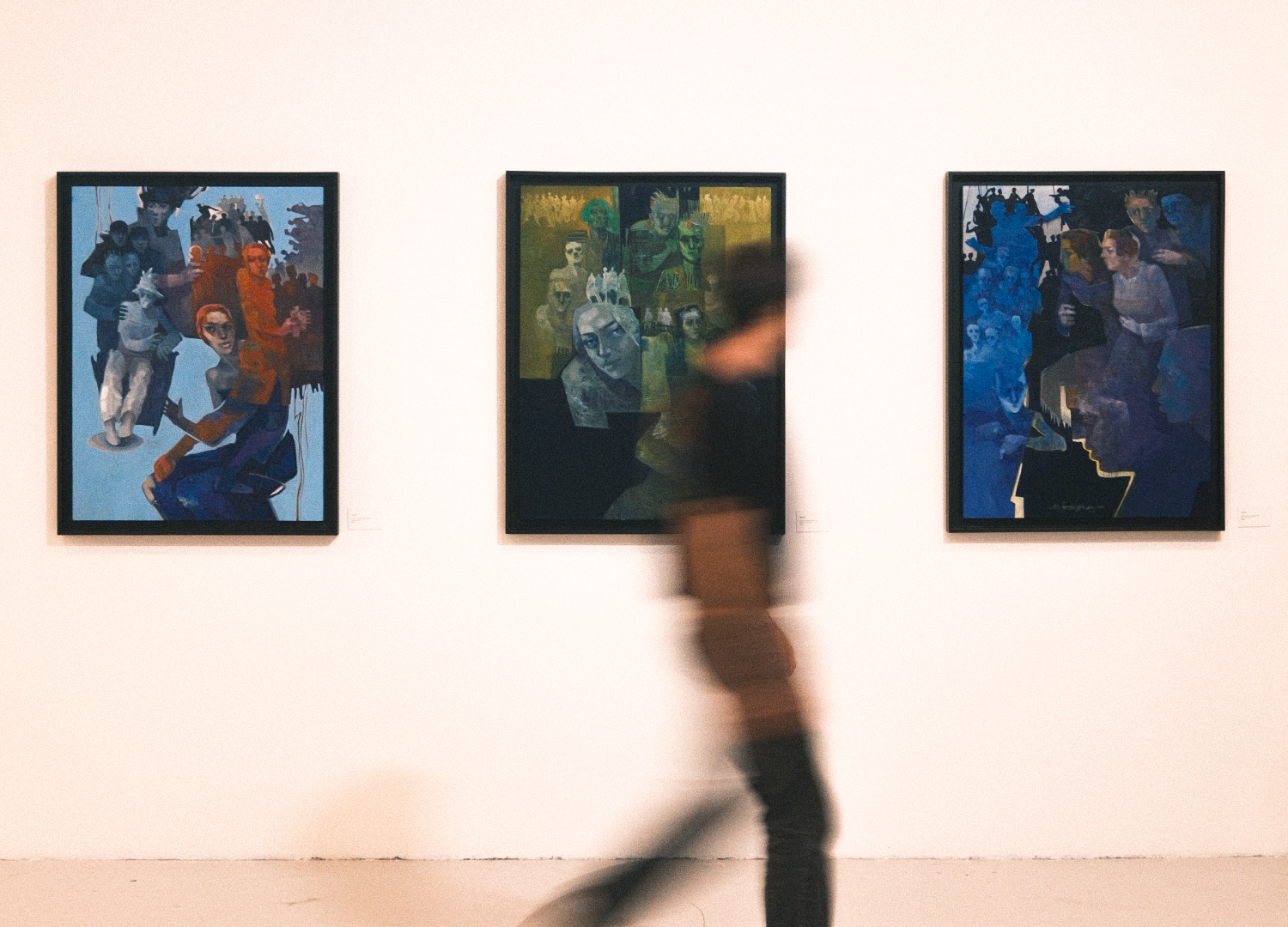
In the Rewind / Slovenia exhibition, one of the most renowned painters of the 20th century, Ive Šubic (1922–1989)—known for depicting both partisan motifs in the Poljanska Valley and scenes of rural life—is represented with several of his works. His daughter, Maja Šubic (born 1965), is a successful painter, illustrator, and fresco artist.
This exhibition emerged as a result of a collaborative project in which artists from the Rewind group in Turkey exhibited together with Slovenian artists the landscapes they painted during their travels in Slovenia. These collaborations will continue, possibly expanding with new artists, and may even transform into enduring friendships between countries. Rewind / Slovenia was born from this understanding, as a product of a dialogical process that aims to establish artistic collaborations with different geographies and carry new formations into the future. Rooted in the ideas of collective creation, sharing, and engaging with place, this project not only created a space for artistic production but also built an intellectual ground that transcends cultural boundaries through the relationship established with space.
As members of the Rewind group, Hakan Esmer, Serdar Leblebici, Özgür Eryılmaz, and Semih Kaplan used the Loka Museum in Škofja Loka as their studio workspace. The museum, opened in 1939, is located in the picturesque Loka Castle and houses collections in history, archaeology, ethnography, natural history, art, and sports. It also features a permanent media exhibition on the “Škofja Loka Passion Play.” These permanent exhibitions and the museum’s collections pay homage to prominent figures whose influence extends beyond local character, among them the founder of Slovenian Impressionism Ivan Grohar (1867–1911) and the artist members of the Šubic family—Štefan, Janez Sr., Janez Jr., Valentin, Jurij, Rajko, Mirko, Ive, and Maja Šubic.
The museum’s collection places special emphasis on the Impressionist painter Ivan Grohar (1867–1911) and the Šubic family. From the very first day of their stay in Slovenia, the Rewind group developed an active dialogue and close collaboration with Maja Šubic in developing their artistic projects. As a contemporary artist and an important living heir of a family whose artistic roots go back 400 years, Maja has participated in numerous exhibitions and events both in Slovenia and across Europe. She keeps her family’s legacy alive by combining her father’s fresco technique with a contemporary visual language, applying this method to portable surfaces using traditional techniques.
The Šubic family holds a significant place in the artistic culture and history of Slovenia, particularly in the Loka region. Within the country’s art scene, the family forms both the foundation and structural pillars of artistic creation, contributing not only to painting and sculpture but also to various crafts such as carpentry.